The Cost of Chaos

I like order.
Probably more than I should.
I like when things have a home. Keys go here. Shoes go there. Tools go back where they belong. Sticks that become pretend swords stay outside. Dishes do not form a tiny leaning tower of nastiness in the sink.
Simple stuff. Reasonable stuff. The kind of stuff that makes life feel slightly less like a hostage situation run by toddlers.
And in theory, life can be optimized pretty far. You can organize the calendar, declutter the house, automate the bills, label the bins, and assign every little object a home.
And honestly?
Some of that is great.
The problem is not wanting order.
The problem is forgetting that a full life is not always an orderly one.
Because everything has a cost.
And I’m starting to realize that some of the richest parts of life come wrapped in the very chaos I keep trying to eliminate.
Kids are chaos. Marriage is chaos. A full house is chaos. A backyard full of split wood and tiny boys swinging axes is very much chaos.
And yet, somehow, that’s the best stuff.
The other day, I let the boys help split some wood.
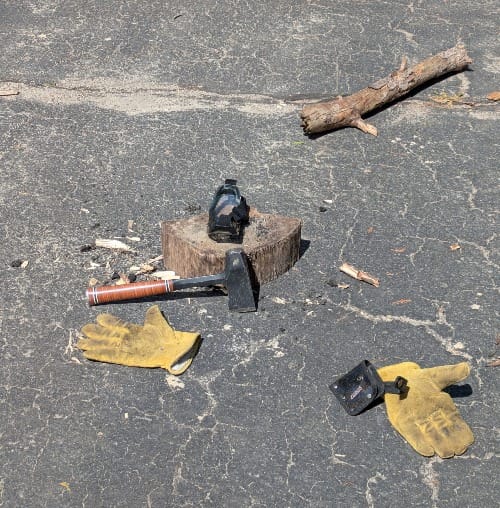
Not with a full axe at first. We have one of those stationary kindling splitters where you place the log in the ring and hammer it down onto the blade. Fairly safe. Very satisfying. Honestly, kind of perfect for kids who want to feel like tiny frontier men without me having to explain to Melissa why someone is missing a toe.
They loved it.
And I loved watching them.
There was something really cool about seeing them do real physical work, especially now, when so much of childhood gets pulled toward screens and glowing rectangles and games that somehow require seven subscriptions and my credit card.
This was different.
Hammer. Wood. Muscle. Crack.
That’s it.
They could see their effort turn into something. They could feel their own strength. They were doing something useful. Something old. Something simple.
Something that didn’t need Wi-Fi, which, given the name of this site, feels a bit ironic.
But then, of course, it started making a mess.
Wood chips everywhere. Bark everywhere. Little sharp splinters spreading across the yard like nature’s Legos.
And for a minute, I saw it exactly the way I wanted to. This is awesome. I’m proud of them. They’re outside, using their bodies, learning something real.
Then the Type A part of me grabbed the wheel.
Shit.
Wood chips everywhere. Splinters everywhere.
What have I done?
The tool they were wielding like Thor himself was my Estwing splitting tool. Hammer on one side. Axe on the other, with a protective sleeve of course.
Safety first.
Naturally, they wanted to try the axe side.
Because of course they did.
That’s parenting. You introduce a safe-ish version of something, and within twelve seconds a child is like, “Cool, but what about the dangerous one?”
And suddenly we were in a different category.
Still manageable.
But sharper. Riskier. Messier.
The part of me that likes control immediately wanted to shut it down. Nope. Too much. Too dangerous. Too messy. Too many variables.
Abort mission.
But another thought showed up.
How cool is this?
Kids learning to respect a tool. Kids doing something a little dangerous, but in a controlled way. Kids getting trusted with responsibility instead of being bubble-wrapped into boredom.
So we got gloves. We got goggles. I gave them rules. I stayed close enough to make sure no one became a cautionary tale, but far enough away that they could feel like they were actually doing it.
And I took a breath.
This is the cost of chaos.
The mess was the price. So was the risk, managed carefully. So was my discomfort.
And the reward was watching my boys experience something real.
Something they’ll probably remember.
Something better than a clean yard.
That’s why I can’t get it out of my head.
The cost of chaos.
It started coming together on one of my monthly hikes with a friend, somewhere between talking about financial independence, parenting, marriage, and whatever else two former corporate guys apparently discuss while wandering through the woods.
On this walk, we were talking about life after leaving work. The weirdness of it. The freedom. The gratitude. And also the strange little truth that life can be objectively great and you can still somehow find yourself annoyed that someone left a cabinet open.
Or that the house is loud.
Or that your kids interrupted a conversation.
Or that your spouse does some tiny harmless thing in a way that your brain has decided is obviously wrong and possibly grounds for a family meeting.
We both understood it. We both have young kids, wives we love, and brains that like structure, solutions, and things making sense.
Which is a lovely little personality trait until you live with other humans.
Because other humans are not systems.
They are people.
Messy, emotional, wonderful, inefficient people. And when you share your life with them, they introduce volatility.
Kids do not care that you had a plan. They do not care that you just cleaned. They do not care that your brain was finally settling into one complete thought after three days of fragmented half-thoughts and interrupted conversations.
They need a snack. They need help finding the toy currently in their hand. They need to tell you something urgent, like how cool it would be if the snack they were eating was quarters and their body was an arcade game with buttons.
Which, honestly, is a pretty solid concept.
And spouses?
Even great ones?
Especially great ones?
They bring their own habits. Their own preferences. Their own way of doing things.
I’m a psychopath who thinks every object should have a clear, logical, mutually agreed-upon home. Meanwhile, Melissa will sweep things into a pile and let the pile decide what it wants to be when it grows up.
Somehow, we have built a life together.
Honestly, inspiring.
The point is, sharing a life with people creates friction. And I think a lot of us quietly treat that friction like a problem to solve.
If you like order, it’s easy to convince yourself the problem is the system. The house needs to be cleaner. The routine needs to be tighter. Everyone needs to get on the same page.
And sure, sometimes that’s true.
Some chaos really is just bad design. Some stress can be removed. Some systems really do help.
I am not here to romanticize looking for one missing shoe while three children scream near a doorway.
That can go straight to hell.
But not all chaos is a problem. Some of it is the natural cost of having the things you wanted.
The cost of children is noise.
The cost of a full house is mess.
The cost of being needed is being interrupted.
And the cost of having people close enough to love is having people close enough to drive you mildly insane.
That’s where it gets tricky.
Because in the moment, the cost feels expensive.
Really expensive.
It’s too loud to read. Too loud to write. Too loud to have a normal conversation with my wife without a small child appearing out of nowhere like a private investigator.
“What are you talking about?”
“Why?”
“What does that mean?”
“Are we getting ice cream?”
No, buddy.
Somehow this was about taxes.
And because the house is loud, and the kids are everywhere, and there’s always something to do, it can start to feel like if Melissa and I are both home, one of us is wasting a chance to go be productive.
So we end up living this tag-team life. One parent taps in. The other taps out. Errands happen in shifts. Workouts get squeezed into weird little windows. Projects get started with the full knowledge that they may be abandoned twelve minutes later because someone is crying over a blanket, a snack, or the wrong color cup.
It can feel relentless.
And I know we’ll miss it.
That’s the annoying part.
Every parent complaining about how hard it is, myself very much included, is usually standing somewhere near an older parent who would give anything to have some of it back.
The toys on the floor. The little voices. The bedtime nonsense. The sticky hands. The tiny shoes. The chaos.
Not all of it.
Let’s not get carried away.
But more of it than we think.
I think there’s a kind of when-you’re-in-it bias. When you are in a hard season, it feels endless. There is no hindsight yet. There is no softened memory. There is no nostalgic soundtrack playing behind the kid melting down because his banana broke.
It’s just hard.
You don’t know how long it lasts. You don’t know how it turns out. You don’t know whether you’re doing it right.
You’re just in it, trying to be grateful while also wondering why every surface in your house is an absolute mess.
I felt something similar after leaving work.
Once I was out, I could look back and think, “Honestly, if I had known I could leave whenever I wanted, I probably could have handled a few more months.”
No big deal.
But that was hindsight talking.
Hindsight removes the pressure. It takes the weight off the thing and lets you hold it differently.
When you’re still in it, you don’t feel that. You feel trapped by the unknown.
I imagine empty nesters feel some version of that too. Sure, it was hard. But I could have done it a little longer. What was I always so stressed about? Look how good they turned out.
But that’s easy to say once the house is quiet.
Too quiet, maybe.
And that’s the part I’m trying to remember now.
Not perfectly.
Not in some enlightened, glowing, monk-on-a-mountain way. I am not floating around the house in linen pants, smiling gently while the children spill milk on the couch for the eighteenth time.
But I am trying to catch myself.
Something annoys me: a mess, a noise, an interruption, a delay, a thing not where it belongs.
And my brain wants to go straight to irritation.
Why is this like this?
Why can’t this be easier?
Why does nobody else see the obvious system that would prevent this minor domestic collapse?
But sometimes I can pause long enough to ask a better question.
What is this chaos connected to?
What would I lose if I eliminated it?
That question helps. Because a lot of the time, the thing frustrating me is attached to something I love.
The toys are not just clutter.
They’re evidence.
Kids live here.
The noise means the house is full. The interruptions mean I’m still needed. The mess in the yard means my boys spent the afternoon learning how to split wood instead of staring into a screen.
That doesn’t make every moment easy.
But it changes the shape of it.
My friend mentioned something he had been reading about how the brain works, and how the more you practice a certain way of thinking, the easier that path becomes.
That made sense to me. Because I’ve felt that a little.
At first, appreciation feels forced, like you’re trying to talk yourself out of being annoyed.
Which, to be fair, you kind of are.
But the more you do it, the more available that thought becomes. The frustration still shows up. It just doesn’t always get the keys to the car.
And honestly, this feels like a pretty important part of financial independence that doesn’t get talked about enough.
Because no longer going into an office every day does not magically rewire your brain. It does not print a permanent smile on your face. It does not turn you into a golden retriever with index funds.
You still bring yourself with you: your habits, your wiring, your impatience, your need for control, and your tiny little demons wearing slippers, wandering around the house looking for something to complain about.
And if you’re wired to notice what’s wrong, financial independence won’t automatically make you notice what’s right.
That part still takes work.
Which is kind of rude, honestly.
You’d think after all the saving and investing and spreadsheet nonsense, the universe could at least throw in emotional enlightenment as a free upgrade.
But no.
Apparently we still have to be people.
The whole point of this journey was not just to stop working. It was to be here. To be home. To be available. To have more time with the people I love.
And then, hilariously, once you finally get more time with the people you love, you remember that people are loud and messy and inefficient.
Classic.
But that’s the deal.
A quiet, perfectly optimized life might be easier. It might be cleaner. It might be more peaceful.
But I’m not sure it would be richer.
(Nerd moment) There’s a line from the show, The Witcher that I love:
“Magic is organizing chaos.”
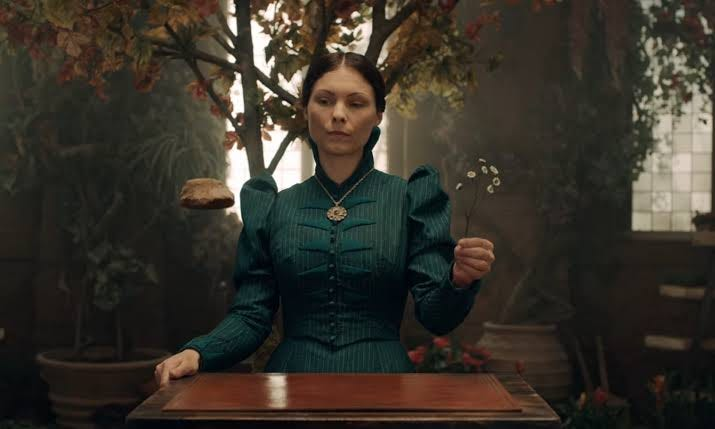
That feels about right.
A good life is not the absence of chaos. It’s learning how to organize it.
Not eliminating every inconvenience. Not controlling every variable. Not turning your family into a highly efficient domestic operations team with quarterly performance reviews.
Just enough balance that the chaos doesn’t swallow you.
And enough openness that it can still surprise you.
A quiet house costs noise.
A full house costs quiet.
A life with kids who explore, build, hammer, climb, spill, create, and turn the backyard into a tiny construction site with feelings costs the clean version of the day.
And someday, I suspect, the house will be quiet.
The tools will stay where I left them. The wood chips will be cleaned up. The conversations with Melissa will be easier to finish. The boys won’t need me hovering nearby with gloves and goggles and a mild fear of urgent care.
And some part of me will miss the absolute nonsense.
So for now, I’m trying to pay the cost.
Not with fake gratitude.
Not by pretending the chaos isn’t hard.
But by remembering what it buys.
Because the chaos is expensive.
But the good stuff usually is.
If you ever want to reply, shoot me a note at whatsthewhyfi@gmail.com — I read everything.