What's the Money For?
Part 6 of 6
This is part of Financially Free Before Your College Degree, a series about money for people young enough to still get the full head start. The plan is for it to become a short book someday, the kind you hand a graduate instead of a card with $50 in it. For now, it’s free. Start at the beginning: the series page.
I had to check what day it was to write this. It’s Tuesday.
That’s not a joke about early retirement brain. The days have genuinely become irrelevant, in the best possible way. Here’s what today looked like. I was up at six, because I’m an early guy and because we have early risers, though my oldest just turned seven and discovered sleeping in. (Five more years until the youngest figures it out. But who’s counting.) Whoever’s awake comes downstairs with me. Coffee goes on. Sports radio goes on. I scroll the markets and the news while a small person eats breakfast next to me. Eggs some days, pancakes others, sometimes we just go get bagels. Then a workout in the basement gym or a run outside now that the weather’s turned. Then, depending on the day, I’m helping to pack the kids up for their homeschool co-op, or I’m in the sandbox with the youngest, or I get a quiet pocket of time to write, mess with a project, or take a book somewhere with a coffee. Everyone comes home, we play outside, and lately I’ve been teaching myself to cook a proper steak once a week. That journey has been delicious.
Three years ago, Tuesday knew exactly what it was. Tuesday was: wake up, squeeze in a workout if the clock allowed, pack a bag, pack a lunch so I didn’t eat garbage, drive to a cube, sit in the cube, walk between meetings when I could, and then spend the last two hours staring at the clock, begging it to move, before sprinting out the door to catch dinner and a little bit of my kids before bed.
Same guy. Same town. Same family. The only thing that changed is who owns the hours.
Now, I couldn’t have written any of this at your age. If you’d asked nineteen-year-old me what my ideal Tuesday looked like, I’d have stared at you. I was thinking about the exam on Thursday and where everyone was going that weekend. Freedom wasn’t a plan I had. It was a word that meant summer.
And the picture keeps moving anyway. What I wanted at 22 wasn’t what I wanted at 32, and whatever I’ll want at 50 is something I can’t see from here.
So this isn’t a test you’re supposed to pass right now. You don’t need the answer. You need to not be starting from zero on the day you find it.
The part the brochure leaves out
Now, before you picture me in a hammock, the honest version.
All the early retirement bloggers I read had kids in traditional school, or no kids at all. They’d wake up to an empty, quiet house and describe these glorious open days. Building things, chasing ideas, guilt-free lazy mornings. What a world. We homeschool our three boys, which I wouldn’t trade for anything, and which also means: there is no empty house. Ever. I can’t have a lazy day or a locked-in productive day without negotiating for it like a treaty. I left a world of obligations and woke up in another one, run by three small people eager to steal every ounce of my newfound time and energy. Which I love. It can also be tough, and I’m still learning to protect my own hours inside of it.
So no, the freedom isn’t rest. What actually changed surprised me. That cloud, the low-grade weight of being responsible for a hundred things I did not care about at all, just... left. I assumed the shackles would take months to break, that I’d be checking phantom email forever. It took about a week and a half. One day, a little past the length of a normal vacation, it just hit me: oh wait. I never have to go back. This is sweet.
That’s the actual product, and I want to be precise about it. The versions I read weren’t wrong, they were just theirs. Everybody’s looks a little different.
Money doesn’t buy you a life without obligations. It buys you the power to choose which obligations are yours.
Mine are now a sandbox, a co-op schedule, and a steak I refuse to overcook. I chose every one of them.
The best one, I never saw coming.
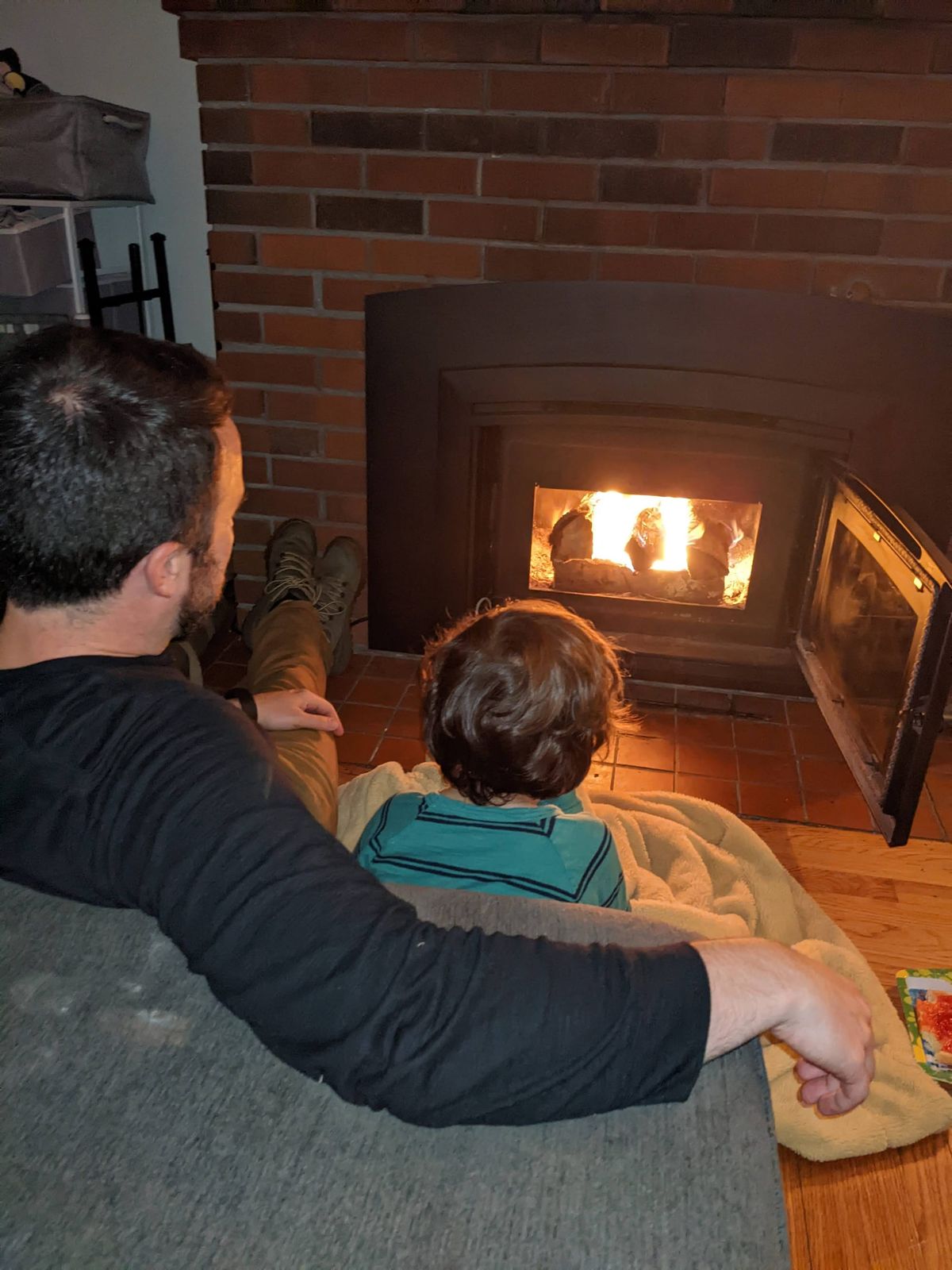
In the winter, I get up early on purpose, while the house is still dark and cold and everyone’s asleep. I build a fire in the fireplace. I pour a coffee. I read a book. That’s it. That’s the whole event. And I enjoy the absolute shit out of it, every sip, while the house slowly warms up around me. Then the kids wander down one by one, grab a blanket, and pile in next to the fire, and it’s the best hour of my day.
Twenty-five-year-old me wouldn’t have called that a waste of time, exactly. He just never would have made time for it. A fire wasn’t worth trading sleep for when work owned the morning. Reading happened in stolen scraps. Coffee got slammed at the counter or spilled in the car. The ingredients were all there my whole life. They cost almost nothing. What I couldn’t afford was the morning itself.
That’s the dirty secret of this whole thing. The life you’re saving for is mostly made of stuff like this, and almost none of it is expensive. The expensive part is the time. When people ask what money buys, this is my answer: money buys the morning.
Spend some of it badly. That’s tuition.
Now, because my own kids will read this someday, the other half.
Every birthday and holiday, when the boys get money, I make them an offer: keep it and spend it, or let me invest it and I’ll match it. Most of the time, they take the match. Smart boys. Best-run company they’ll ever work for.
But I don’t actually want them to invest all of it, and I don’t want you to either. When I was young I bought stereo equipment that was completely pointless. I bought DVDs. (Yes, I’m old. The DVDs did not appreciate.) All of it was money down the drain, and none of it was wasted, because that’s where I learned what spending actually feels like: handing over money you worked for, for something exciting, and then watching the excitement leave before the thing does. You have to feel that a few times. Nobody develops real resolve for investing without knowing exactly what the alternative feels like.
And it can’t tip the other way either. You can’t forgo everything in life in the name of someday. A perfectly optimized 22-year-old who never spends a dumb dollar isn’t winning, he’s just deferring his whole personality. There has to be balance, and at 22 your balance will be bad, and that’s fine. You’re supposed to make your mistakes young. Don’t save them for later. They hurt a lot more when you’re old.
So here’s the last question of this series, and it’s the only one that ever mattered. Not what’s your number, or your rate, or your net worth.
What’s the money for?
Don’t answer with a dollar amount. Answer with a Tuesday. Describe the ordinary day you’d build if nobody owned your hours but you. Whose voices are in it, what the morning looks like, what you’d cook, what you’d skip. That’s the thing you’re actually funding. Every essay before this one was just how to pay for it.
Mine has a fire in it.